


When we first met the BuuPass team, we saw something fundamentally different: a
company that understood Africa’s transport sector wasn’t just a digital problem to be
solved with elegant code, it was a deeply physical challenge requiring
boots-on-the-ground execution.
This distinction has become the cornerstone of our investment philosophy at Gullit
VC. Africa’s biggest opportunities lie with companies that can easily blend digital
innovation with physical world problem-solving.
The Physical Reality Behind Digital Success
Take BuuPass, for example, which has now processed over 20 million tickets across
East Africa. What looked like a simple booking platform was solving a complex web of
physical challenges. Bus operators were bleeding cash through pen-and-paper
ticketing systems, routes were poorly optimised due to a lack of real-time data, and
passengers had no reliable way to access fragmented transport networks.
BuuPass went beyond booking software. Their Bus Management System gives
operators real-time tracking, data analytics, and actionable insights to optimise
routing and reduce overcrowding or under-servicing.
The company’s success came not from superior app design, but from its ability to
work directly with bus companies, helping them digitise inventory and handle mobile
payments through partnerships with Safaricom and M-Pesa. Today, they process
approximately 12,000 transactions daily and have partnerships with major
transportation providers across Kenya, Uganda, Tanzania, Rwanda, and South Africa.
Similarly, our investment in Logidoo wasn’t driven by their logistics management
software; it was their understanding that African trade corridors needed fundamental
restructuring. Through strategic partnerships like their alliance with Skynet, they
implemented groupage solutions that cut transit times by 40% across critical routes
linking China, Europe, and South Africa with West Africa. The technology was
secondary to the operational insight.
Why International Investors Miss the Point
The most persistent blind spot I encounter with some international investors is their
focus on scalable software solutions rather than scalable problem-solving. They’ll back
a beautiful consumer app that struggles to monetise, while overlooking a “boring”
logistics company that’s systematically dismantling trade barriers across multiple
countries.
This misunderstanding runs deeper than preference; it reflects a fundamental
misreading of African markets. While Western tech has the luxury of optimising for
convenience and engagement, African solutions must solve for access, reliability, and
affordability. These aren’t software problems; they’re infrastructure problems that
require software solutions.
Consider WellaHealth, another portfolio company that demonstrates this principle.
They didn’t start by building a healthcare app. They started by understanding that
community pharmacies are the true frontline of healthcare in places like Nigeria, then
built tools that addressed the day-to-day challenges these pharmacies faced. Today,
they reach over 200,000 people and support 2,000+ pharmacies because they built for
the real-world context first.
And outside our portfolio, look at Flutterwave in fintech or Twiga Foods in agriculture,
both blend tech and physical networks, proving that operational foundations can
scale just as powerfully as code.
The Operations vs. Technology Trade-off
If I had to choose between investing in Africa’s best mobile app development team
with no physical operations experience versus a strong logistics team with basic tech
skills, I would choose the operations team every time.
Tech can be hired, partnered with, or acquired. Operational resilience cannot.
This isn’t to diminish the importance of technology. Rather, it’s recognising that in
African markets, technology serves execution, not the other way around. The
companies that succeed are those that use digital tools to enhance physical
operations, not replace them.
Although operational-heavy models have challenges like higher capital intensity than
software-only plays, slower early scalability, and exposure to infrastructure and political
risk, when they work, they build moats that pure software struggles to match.
The Green Flags That Matter
Through years of evaluating African startups, I’ve learned to recognise patterns that
contradict conventional VC wisdom. The biggest green flag isn’t rapid user acquisition
or viral growth, it’s operational discipline combined with deep local awareness.
The founders who succeed execute relentlessly in one market, build sustainable
revenue, and grow with intention. They understand infrastructure gaps and regulatory
nuances on the ground, and they build with those realities in mind.
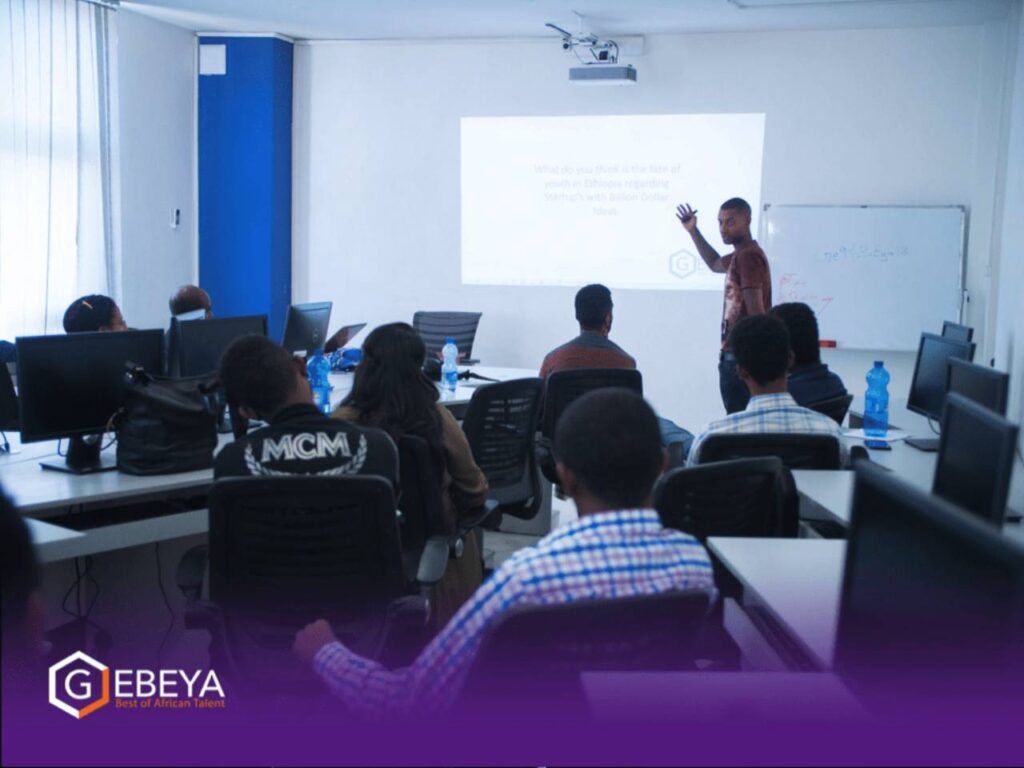
Gebeya, our talent platform investment, exemplifies this approach. They’ve evolved
from training and placement into a full-scale talent cloud platform with AI integration,
growing in both purpose and product as Africa’s digital economy matures.
Conversely, the red flag I’ve learned to take most seriously is when early-stage startups
rush to scale without focus or financial discipline. Premature expansion without
supporting infrastructure can be fatal, especially when founders chase growth metrics
or investor hype while neglecting operational fundamentals.
Infrastructure as Competitive Advantage
The next wave of African tech winners will be those that recognize infrastructure isn’t
a constraint to overcome but a competitive advantage to build. Whether it’s payment
rails, logistics networks, or distribution systems, the companies creating physical
infrastructure while delivering digital experiences will capture outsized returns.
While other regions optimise existing infrastructure, African companies have the
opportunity to leapfrog legacy systems entirely, but only if they’re willing to do the
hard work of building from the ground up.
For international investors looking to participate in Africa’s tech growth, the lesson is
clear: don’t just look for the next great app. Look for the companies solving the
continent’s most fundamental problems, one physical challenge at a time. That’s
where the real value gets created, and where sustainable competitive advantages are
built.
{This Article was first seen on Disrupt Africa}